
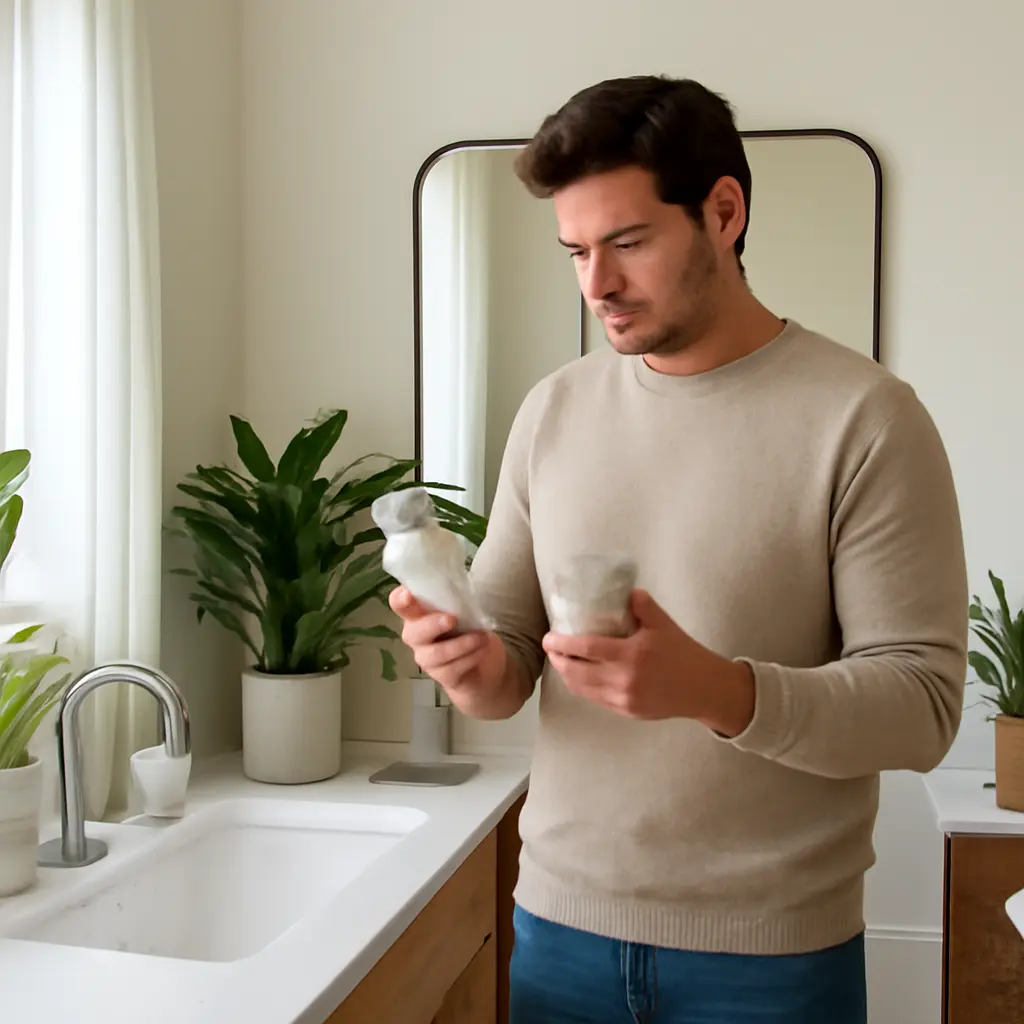
Green beauty products—cosmetics and personal-care items marketed around plant-derived ingredients, environmental responsibility, or both—can disappoint when shoppers assume “natural” means safer, more effective, or automatically sustainable. Three common mistakes drive the backfire: treating natural claims as proof of safety, overlooking preservation and product-specific risks, and trusting vague environmental language or packaging claims. These distinctions matter in a large market: Grand View Research estimated the global natural and organic personal-care market at about $21.5 billion in 2023. The U.S. Food and Drug Administration (FDA) also cautions that “natural” has no established regulatory definition for cosmetics, so the label alone cannot verify a product’s safety or benefits.
Green beauty product safety depends on ingredients, not “natural” claims
A product’s safety is its likelihood of causing harm under the conditions in which it is used. For cosmetics in the United States, the FDA generally does not approve products or ingredients before they go on sale, with color additives among the exceptions; companies are responsible for ensuring products are safe and properly labeled. The FDA explains that natural ingredients are not automatically safer than synthetic ones. Poison ivy is natural, while many carefully evaluated synthetic ingredients are designed for predictable use.
This means “clean,” “botanical,” and “chemical-free” are not substitutes for checking the formula. All physical matter is made of chemicals, and a plant extract can contain multiple compounds with different effects. Relevant factors include the ingredient, concentration, route of exposure, frequency of use, and a person’s sensitivity.
Mistake 1: Assuming natural means hypoallergenic
Hypoallergenic is a marketing term, not a guarantee that a product cannot trigger an allergic reaction. Fragrance ingredients, essential oils, and botanical extracts can irritate skin or cause contact allergy in some users. The American Academy of Dermatology recommends that people with sensitive skin choose fragrance-free products; “unscented” may still describe a product containing ingredients used to mask odor.
A practical example is a face oil featuring citrus or lavender essential oil. Its plant origin does not prevent irritation, and some fragrance ingredients may increase sensitivity in particular circumstances. Introduce unfamiliar products one at a time, follow the label, and stop using a product that causes persistent redness, itching, swelling, or burning. People with a history of reactions should seek advice from a dermatologist rather than relying on a “natural” badge.
Mistake 2: Treating “preservative-free” as a safety benefit
Preservatives help prevent the growth of harmful microorganisms in products that can be contaminated, particularly water-based creams, lotions, and some cleansers. FDA guidance notes that contaminated cosmetics can cause health problems and that inadequate preservation, poor manufacturing, or unsuitable storage can contribute to contamination. A product without conventional preservatives is not necessarily safer: its formula, packaging, manufacturing controls, and use instructions still matter.
For example, dipping wet fingers into a jar of face cream can introduce water and microbes. Airless pumps or tubes may reduce repeated contact, but packaging alone does not prove a product is protected. Follow storage directions, avoid sharing cosmetics, discard products that change in smell or appearance, and observe the period-after-opening symbol or stated expiration date where provided.
Green beauty product performance depends on matching claims to needs
A cosmetic’s performance is whether it delivers the result a shopper expects, such as moisturizing, cleansing, or providing sun protection. Ingredient stories and sustainability language do not establish that a product will perform well for a particular person. Reading the full ingredient list and following use directions is more useful than relying on a front-label claim.
Mistake 3: Choosing a product by trend instead of function
A product may be plant-based and still be unsuitable for a person’s skin type or intended use. A rich balm can feel uncomfortable on oily skin, while a fragranced botanical formula may aggravate sensitive skin. Likewise, a moisturizer marketed as “clean” is not a replacement for sunscreen: the American Academy of Dermatology recommends broad-spectrum, water-resistant sunscreen with SPF 30 or higher for exposed skin.
Treat product claims as questions to verify. For a cleanser, consider whether it removes makeup without leaving the skin uncomfortably dry. For a moisturizer, look for a texture and ingredients that suit your needs. For sun protection, check the labeled SPF and broad-spectrum claim, then apply and reapply according to the directions. Do not infer clinical effectiveness from words such as “detox,” “chemical-free,” or “green.”
Patch testing can reduce surprises, but it is not a guarantee
Testing a small amount of a new leave-on product on a limited area before routine use can help reveal some irritation or sensitivity. It cannot rule out every reaction, and a home test is not the same as formal allergy testing. If a product causes a severe reaction, discontinue use and seek medical care when needed; recurring reactions warrant professional assessment.
Green beauty product sustainability requires evidence beyond packaging
Environmental sustainability is the impact of a product across relevant stages such as ingredient sourcing, manufacturing, transport, use, and disposal. A recyclable-looking container or a “natural” ingredient does not, by itself, establish a smaller overall footprint. The U.S. Federal Trade Commission’s Green Guides advise that environmental marketing claims should be clear, specific, and supported by competent evidence; broad, unqualified claims such as “green” can mislead when they imply benefits the seller cannot substantiate.
Mistake 4: Trusting vague eco-labels and unverified claims
Terms such as “eco-friendly,” “clean,” and “planet-safe” may lack a consistent, independently verified meaning. A label can refer to one attribute—such as a certain percentage of recycled plastic—without describing the full product’s impact. Look for a specific explanation of what is certified, who performed the certification, and which standard applies. Certifications can be useful signals, but their scope matters: an ingredient-focused standard does not necessarily assess packaging or total lifecycle impacts.
The FTC’s guidance is especially relevant to claims about recyclability. A recyclability claim should reflect whether appropriate recycling facilities are available to a substantial majority of consumers, and qualifications may be needed when access is limited. Local rules also matter: a pump, dropper, mirror, or mixed-material component may need to be removed or may not be accepted in a household recycling program.
Packaging choices should be judged in context
Refillable, recyclable, and recycled-content packaging describe different things. A refill system can reduce packaging only if consumers reuse it enough and the refill format itself does not erase the benefit. Recycling depends on local collection and sorting systems, while recycled content describes material input rather than end-of-life recovery. The U.S. Environmental Protection Agency’s waste hierarchy places source reduction and reuse above recycling, supporting a practical priority: buy only what you will use, choose durable or refillable formats when genuinely convenient, and check local recycling instructions.
A shopper comparing two products can use a simple checklist:
- Check whether the ingredient and product claims are specific and understandable.
- Consider fragrance, known sensitivities, intended use, and storage requirements.
- Look for evidence behind sustainability or certification claims, including the claim’s scope.
- Confirm whether packaging components are accepted by the local recycling program.
- Prefer products you can finish and use as directed over purchases driven by trend or green branding.
Conclusion: Green beauty works best when shoppers verify claims
Green beauty products can be a reasonable choice, but they backfire when “natural” is mistaken for safe, “preservative-free” for better, or “eco-friendly” for proven. Evaluate safety through the actual formula and your own needs; judge performance by the product’s intended function; and assess environmental claims by their evidence, scope, and local disposal realities. Before buying, read the label, check relevant claims, and choose a product you can use safely and completely. For further guidance, consult FDA cosmetic-safety information, the FTC Green Guides, and advice from a dermatologist for persistent skin concerns.
Sources: U.S. Food and Drug Administration, “Cosmetics: The Difference Between ‘Natural’ and ‘Synthetic’ Ingredients,” https://www.fda.gov/cosmetics/cosmetics-labeling-claims/cosmetics-difference-between-natural-and-synthetic-ingredients; U.S. Food and Drug Administration, “Bacteria and Other Microorganisms in Cosmetics,” https://www.fda.gov/cosmetics/potential-contaminants-cosmetics/bacteria-and-other-microorganisms-cosmetics; American Academy of Dermatology Association, “How to Select a Sunscreen,” https://www.aad.org/public/everyday-care/sun-protection/sunscreen-patients/how-to-select-sunscreen; American Academy of Dermatology Association, “How to Test Skin Care Products,” https://www.aad.org/public/everyday-care/skin-care-secrets/routine/test-skin-care-products; Federal Trade Commission, “Guides for the Use of Environmental Marketing Claims (Green Guides),” https://www.ftc.gov/business-guidance/resources/green-guides; U.S. Environmental Protection Agency, “Sustainable Materials Management: Non-Hazardous Materials and Waste Management Hierarchy,” https://www.epa.gov/smm/sustainable-materials-management-non-hazardous-materials-and-waste-management-hierarchy; Grand View Research, “Natural and Organic Personal Care Products Market Size, Share & Trends Analysis Report,” https://www.grandviewresearch.com/industry-analysis/natural-organic-personal-care-products-market