
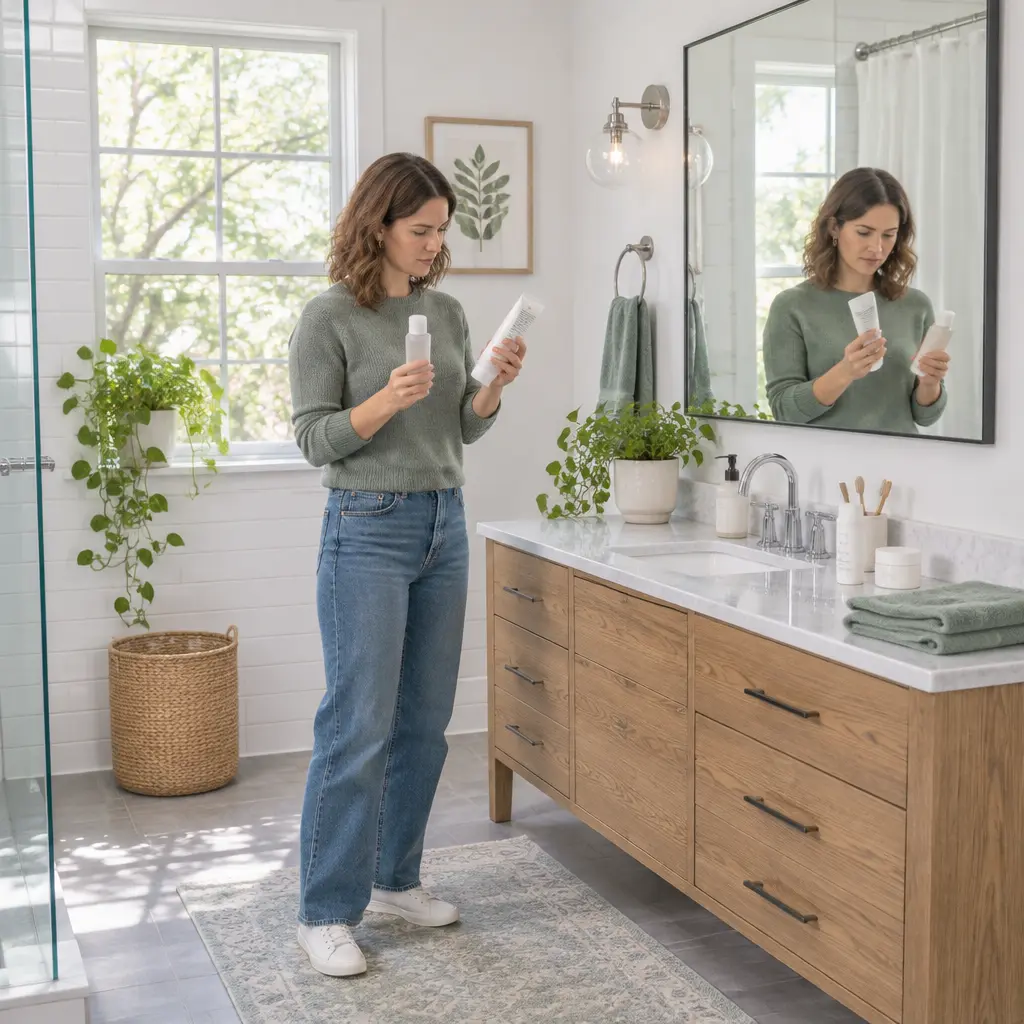
Natural beauty products are cosmetics and personal-care products marketed with ingredients or production practices associated with nature, such as plant oils, mineral pigments, or botanical extracts. People are switching to them because they want ingredient transparency, products that feel gentler, and options they believe better align with environmental values. The shift is commercially significant: Grand View Research estimated the global natural cosmetics market at US$37.9 billion in 2023 and projected continued growth. But “natural” does not automatically mean safer, more effective, or more sustainable. Understanding consumer motivations means looking at health concerns, environmental claims, product performance, and the evidence behind labels.
Consumer motivations and natural beauty product choices
Natural beauty products are not defined by one universal ingredient list or certification. In the United States, the Food and Drug Administration (FDA) does not define “natural” for cosmetics, and it generally does not pre-approve cosmetic products or ingredients before they are sold, apart from color additives. As a result, the term can describe products with very different formulas and standards.
Common categories include botanical skincare, mineral makeup, plant-oil haircare, and products labeled organic, vegan, or cruelty-free. These terms describe different things: “natural” usually refers to ingredient origin or marketing, “organic” relates to agricultural production and certification, “vegan” concerns animal-derived ingredients, and “cruelty-free” refers to animal testing policies. They are not interchangeable.
Ingredient awareness and perceived gentleness
Ingredient awareness means paying closer attention to what a product contains and how those ingredients may affect the skin. Some shoppers seek formulas without particular substances, fragrances, or preservatives because of sensitivities, past reactions, or personal preference. Natural products may seem gentler, but plant-derived ingredients can also cause irritation or allergic contact dermatitis. The American Academy of Dermatology advises people with sensitive skin to check ingredients and test new products rather than assuming a “natural” label guarantees suitability.
This distinction matters because a product’s safety depends on its specific ingredients, concentration, formulation, and use—not simply whether its ingredients are natural or synthetic. The FDA also notes that cosmetic companies are responsible for ensuring product safety and proper labeling. Consumers with recurring reactions can consult a dermatologist and consider patch testing under professional guidance.
Environmental values and ethical purchasing
Environmental purchasing is another reason people choose natural beauty products. Shoppers may look for plant-based ingredients, recyclable packaging, reduced plastic, responsibly sourced materials, or cruelty-free policies. These features can influence a purchase, but “natural” alone does not establish a product’s environmental impact. Farming, land use, processing, transportation, packaging, and disposal all contribute to a product’s footprint.
The United Nations Environment Programme has identified plastic packaging as a major source of plastic waste and pollution. In beauty products, packaging choices can therefore be as relevant as ingredient origin. Refillable containers, concentrated formulas, and genuinely recyclable packaging may reduce waste, although the benefit depends on whether consumers reuse or recycle them and whether local systems accept the materials.
Product trust and natural beauty product claims
Trust in natural beauty products depends on whether claims are clear, specific, and supported. Because “natural” has no single FDA definition for cosmetics in the United States, shoppers may encounter products that use the word differently. Certification can offer additional information, but each seal applies its own criteria and scope; consumers should check what a certification actually verifies.
Labels, certifications, and greenwashing
Greenwashing occurs when environmental or ethical marketing creates a stronger impression than the evidence supports. Broad claims such as “clean,” “green,” or “chemical-free” may be unclear: all substances, including water and botanical oils, are chemicals. More useful labels identify a measurable attribute, such as a named organic certification, a specific recycled-packaging percentage, or a clearly stated animal-testing policy.
The Federal Trade Commission’s Green Guides advise marketers to qualify environmental claims and provide a reasonable basis for them. Shoppers can apply the same principle by checking the full ingredient list, the certifying organization, and the exact claim rather than relying on front-of-package language alone. A logo is most informative when the organization publishes standards and explains how products are assessed.
Effectiveness, safety, and the limits of “natural”
A natural product’s effectiveness depends on its formulation and intended use. For example, a moisturizer may help reduce water loss through occlusive ingredients, while a sunscreen must provide tested protection against ultraviolet radiation. Botanical ingredients can be useful in some formulations, but evidence for one ingredient or product cannot automatically be applied to every product carrying a natural label.
Natural products are not inherently safer than synthetic alternatives. Essential oils and fragrance components can trigger reactions in some people, while preservatives help prevent microbial growth in water-containing products. Consumers should follow directions, check expiration or period-after-opening guidance, and stop using a product if it causes a reaction. For sunscreen and other products with specific protective claims, choose products with appropriate testing and labeling rather than relying on marketing category.
Market growth and practical consumer choices
The movement toward natural beauty is part of a broader demand for products that communicate ingredient and sourcing choices. Grand View Research valued the global natural cosmetics market at US$37.9 billion in 2023, reflecting a substantial commercial category, though market estimates vary depending on how researchers define “natural cosmetics.” Growth signals consumer interest; it does not independently prove that products are safer or environmentally superior.
A practical checklist for choosing products
Consumers can make more informed choices by matching a product to their priorities instead of treating “natural” as a complete quality guarantee:
- Identify the specific goal, such as avoiding a known irritant, choosing certified organic ingredients, or reducing packaging waste.
- Read the ingredient list and check the product’s intended use, warnings, and directions.
- Verify what a certification or environmental claim covers, and look for published standards.
- Consider the complete product lifecycle, including sourcing, packaging, transport, and disposal.
- Introduce new skincare products cautiously, especially if you have sensitive skin or a history of allergies.
Real-world example: choosing a moisturizer
A shopper choosing between two moisturizers might compare the full ingredient lists, fragrance content, packaging, and any third-party certification. If the shopper has sensitive skin, a fragrance-free formula may be a more relevant criterion than whether the product is marketed as natural. If reducing waste is the priority, a refill system or packaging accepted by local recycling services may matter more than the botanical origin of an ingredient. This kind of comparison turns a broad preference into a decision grounded in individual needs and verifiable product details.
Conclusion: Making informed natural beauty choices
People are switching to natural beauty products for ingredient awareness, perceived gentleness, environmental concerns, and a desire for more transparent or ethical purchasing. Market estimates show that natural cosmetics are a sizeable and growing category. Yet the central lesson is that “natural” is not a universal safety standard or proof of sustainability. Product performance, ingredient evidence, certification criteria, and packaging all deserve attention.
Before buying, define what matters most, verify specific claims, and choose products suited to your skin and purpose. For further guidance, consult FDA cosmetic safety information, dermatology resources on sensitive skin, and the standards published by relevant certification organizations.
Sources: U.S. Food and Drug Administration, “Cosmetics Labeling Claims,” https://www.fda.gov/cosmetics/cosmetics-labeling-claims/cosmetics-labeling-claims; U.S. Food and Drug Administration, “FDA Authority Over Cosmetics: How Cosmetics Are Not FDA-Approved, but Are FDA-Regulated,” https://www.fda.gov/cosmetics/cosmetics-laws-regulations/fda-authority-over-cosmetics-how-cosmetics-are-not-fda-approved-are-fda-regulated; Grand View Research, “Natural Cosmetics Market Size, Share & Trends Analysis Report,” https://www.grandviewresearch.com/industry-analysis/natural-cosmetics-market; American Academy of Dermatology Association, “How to Test Skin Care Products,” https://www.aad.org/public/everyday-care/skin-care-secrets/routine/test-skin-care-products; United Nations Environment Programme, “Plastic Pollution,” https://www.unep.org/plastic-pollution; Federal Trade Commission, “Environmental Claims: Summary of the Green Guides,” https://www.ftc.gov/business-guidance/resources/environmental-claims-summary-green-guides