
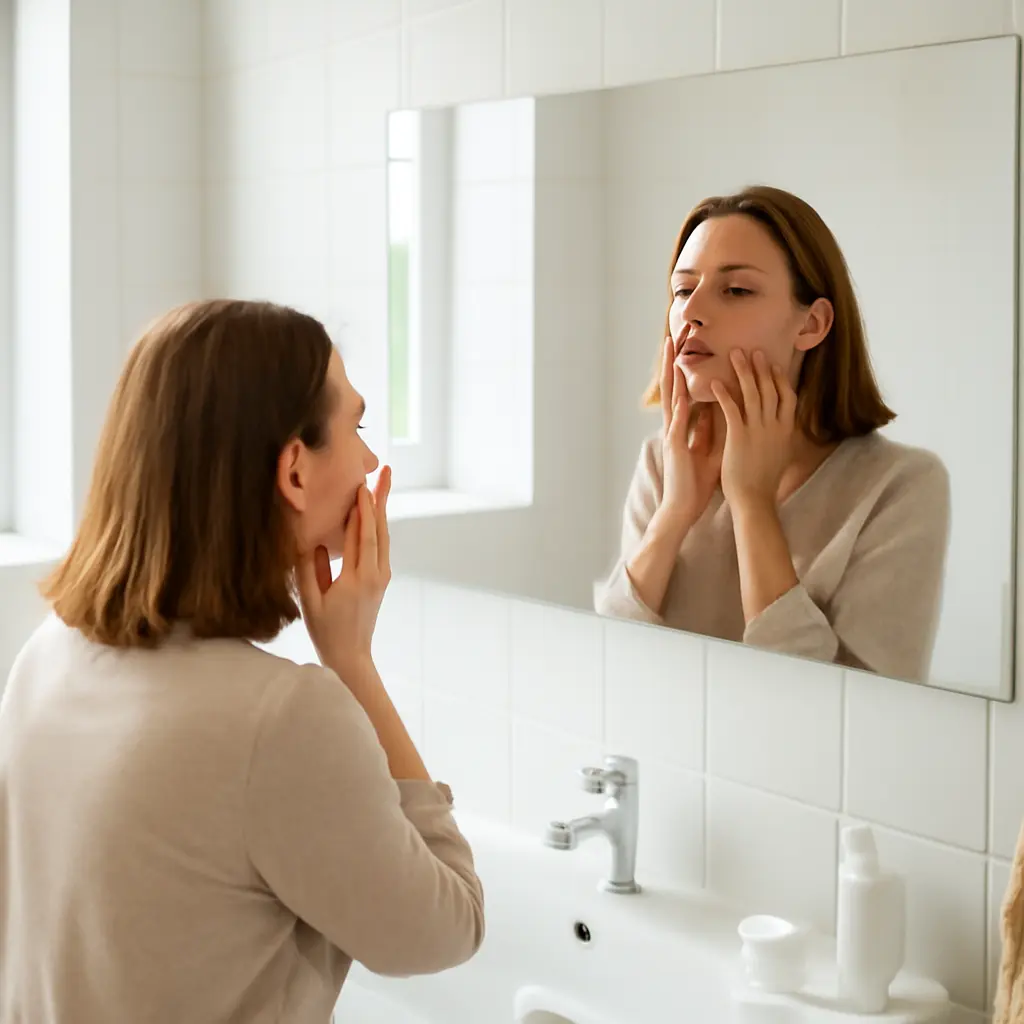
Aging skin can look temporarily fuller when it holds more water, but no natural ingredient has been shown to permanently restore lost facial volume or reliably plump skin faster than proven medical treatments. The most useful topical options are humectants such as glycerin and hyaluronic acid, which attract and retain water, plus barrier-supporting moisturizers such as ceramide-containing formulas that help reduce water loss. Evidence varies by ingredient and product: effects are generally modest, depend on regular use, and may be more noticeable as temporary hydration than as reversal of wrinkles. Understanding that distinction helps set realistic expectations, choose safer products, and recognize when persistent volume loss needs a dermatologist’s advice.
What “plumping” means for aging skin
Skin plumping is a visible increase in surface hydration and suppleness that can make fine lines look less prominent. It is not the same as rebuilding the deeper fat, collagen, or bone structures that contribute to age-related facial volume loss. The American Academy of Dermatology (AAD) explains that moisturizers can trap water in the skin, temporarily softening the appearance of fine lines; topical products cannot reproduce the effects of injectable fillers or surgery.
That distinction matters because facial aging is not just dryness. The National Institute on Aging notes that skin commonly becomes thinner and less elastic with age, while sun exposure and other factors can accelerate visible changes. A moisturizer may improve the look and feel of dehydrated skin, but a quick, lasting change in facial contours should not be expected from a natural topical ingredient.
Humectants plump aging skin by attracting water
Humectants are water-binding ingredients used in skin-care products. The U.S. Food and Drug Administration does not define a special anti-aging category for them; in dermatology, the term describes ingredients that draw water into the outer skin layer. Their most credible “fast-plumping” effect is improved hydration, which may make skin feel smoother and temporarily soften the appearance of fine lines.
Glycerin: a well-studied, practical humectant
Glycerin, also called glycerol, is a naturally occurring compound in the body and a widely used moisturizer. A review in the Journal of the American Academy of Dermatology describes glycerin as a humectant that supports skin hydration and barrier function. In practice, glycerin is often included in creams and lotions alongside emollients and occlusives, which help smooth the surface and slow moisture loss.
For a quick cosmetic effect, apply a glycerin-containing moisturizer to slightly damp skin and follow with a cream suited to your skin type. The visible change is hydration—not new collagen or restored facial fat—and results can fade as water is lost or the product is washed away.
Hyaluronic acid: hydration depends on the formula
Hyaluronic acid is a molecule naturally present in skin and connective tissue that can bind water. Applied in a topical serum or cream, it can improve surface hydration and make skin feel temporarily more supple. A review published in Dermatologic Therapy discusses topical hyaluronic acid’s potential to improve hydration and the appearance of skin, while also noting that outcomes depend on product characteristics and the ability of ingredients to act at different skin depths.
A topical hyaluronic acid product is not equivalent to an injectable hyaluronic acid filler. The AAD describes fillers as medical procedures that add volume beneath the skin; a serum mainly affects the outer layers. Use the serum according to its label and apply moisturizer afterward if your skin feels dry or tight.
Aloe vera and other plant-derived humectants
Aloe vera gel can provide a cooling, moisturizing feel, and some formulations contain polysaccharides that help hold water. However, evidence that aloe produces a meaningful, lasting plumping effect in aging facial skin is limited compared with the practical evidence for standard moisturizers. “Natural” also does not mean non-irritating: the National Center for Complementary and Integrative Health reports that topical aloe can cause burning, itching, rash, or eczema in some people.
Plant oils such as jojoba or sunflower oil are better understood as emollients than as water-attracting plumpers. They can make dry skin feel softer by reducing roughness and supporting the surface barrier, but oil alone does not supply water. This leads to the next important category: ingredients that help keep hydration from escaping.
Barrier-supporting ingredients help hydration last
A skin barrier is the outer protective layer that limits water loss and helps shield skin from irritants. Moisturizers commonly combine humectants, emollients, and occlusives: humectants attract water, emollients smooth the skin, and occlusives form a surface layer that slows evaporation. The National Eczema Association describes this combination as a useful approach to moisturizing dry skin.
Ceramides: supporting the skin’s protective layer
Ceramides are lipids found naturally in the outer skin barrier. In moisturizers, they help reinforce the skin’s ability to retain moisture and may be useful when skin is dry or sensitive. They do not directly fill wrinkles, but a better-hydrated surface can look smoother. The National Eczema Association identifies ceramide-containing moisturizers as one option for supporting dry, barrier-impaired skin.
Oat, shea butter, and plant oils: comfort rather than instant volume
Colloidal oatmeal can soothe some dry, itchy skin, while shea butter and plant oils act mainly as emollients or occlusives. These ingredients may make skin feel more comfortable and reduce roughness, but there is not strong clinical evidence that they rapidly rebuild age-related facial volume. People with allergies or reactive skin should check ingredient labels and test a new product on a small area first.
In other words, the best topical “plumping” routine usually pairs water-binding ingredients with barrier care. For longer-term visible improvement, daily sun protection is also essential because ultraviolet exposure contributes to premature skin aging.
What research says about speed and realistic results
Hydration can improve how skin looks relatively quickly, but there is no dependable universal timeline: the effect depends on how dry the skin is, the product formulation, the environment, and how consistently it is used. The AAD notes that moisturizers can reduce the appearance of fine lines by trapping water, while also emphasizing that skin-care products generally produce modest results compared with procedures. Claims of dramatic, immediate, permanent plumping from a natural cream should therefore be treated cautiously.
For comparison, prescription retinoids such as tretinoin have evidence for improving some signs of photoaging over time, but they can irritate skin and are not quick fillers. The AAD advises using sun protection and discussing treatment choices with a dermatologist. A small patch test is sensible for new products, especially for sensitive skin; discontinue use and seek medical advice if a product causes significant swelling, burning, or a persistent rash.
A practical routine for a temporarily fuller look
- Cleanse gently with lukewarm water and avoid harsh scrubbing, which can worsen dryness.
- Apply a glycerin- or hyaluronic-acid-containing moisturizer while skin is slightly damp.
- Use a cream with ceramides or other barrier-supporting ingredients if dryness persists.
- In the daytime, apply broad-spectrum sunscreen with SPF 30 or higher. The AAD recommends broad-spectrum, water-resistant SPF 30 or higher for exposed skin.
- Choose fragrance-free products if your skin is sensitive, and introduce one new product at a time.
For a visual comparison, a simple chart could group ingredients by primary role: glycerin and hyaluronic acid as humectants; ceramides as barrier-supporting lipids; and oils or shea butter as emollient or occlusive ingredients. The chart should label the expected benefit as hydration or comfort—not permanent restoration of facial volume.
Conclusion: choose hydration, not miracle claims
Natural ingredients can help aging skin look temporarily fuller when they improve surface hydration. Glycerin and hyaluronic acid are useful humectants; ceramides, colloidal oatmeal, and suitable emollients can help support comfort and moisture retention. Their effects are different from rebuilding collagen or replacing lost facial volume, and “natural” ingredients can still irritate or trigger allergies.
For a sensible starting point, use a gentle moisturizer, protect skin from the sun, and judge products by realistic hydration benefits rather than dramatic promises. If volume loss, persistent dryness, or irritation is a concern, consult a board-certified dermatologist for options tailored to your skin.
Sources: American Academy of Dermatology, “Wrinkle remedies”; American Academy of Dermatology, “How to select a sunscreen”; National Institute on Aging, “Skin Care and Aging”; Fluhr JW, Darlenski R, Surber C, “Glycerol and the skin: holistic approach to its origin and functions,” Journal of the American Academy of Dermatology, 2008; Pavicic T, Gauglitz GG, Lersch P, et al., “Efficacy of cream-based novel formulations of hyaluronic acid of different molecular weights in anti-wrinkle treatment,” Journal of Drugs in Dermatology, 2011; National Center for Complementary and Integrative Health, “Aloe Vera”; National Eczema Association, “Moisturizing”; U.S. Food and Drug Administration, “Dermal Fillers (Soft Tissue Fillers).”